Final Leg, First Impression: Packaging for UK Lockers and Click-and-Collect in 2026
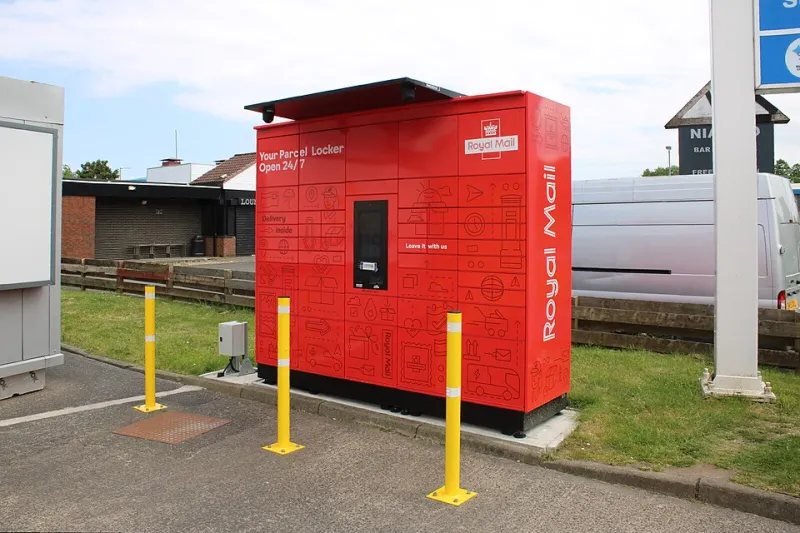
Photo: Richard Sutcliffe , CC BY-SA 2.0, via Wikimedia Commons
The parcel journey no longer ends at a letterbox. A UK customer may now collect from a locker, pick up from a shop counter, receive at a workplace reception or find the order on a doorstep after a rain shower. Each of those endings places different demands on the pack. The businesses that manage them well are not necessarily using thicker boxes or more tape. They are designing for the final leg with a clear view of what the carrier, the locker and the customer will actually do with the parcel.
The last 100 metres are the hardest to design for
A parcel that leaves a workshop in good condition may be stacked, scanned, tipped, carried in a delivery bag, stored in a shop backroom and handed over by someone who did not pack it. In a locker, it may sit in a confined compartment. On a doorstep, it may face damp, cold and low light. The pack has to remain legible and intact through all of this without becoming a miniature crate.
The practical answer is targeted durability. The outer pack needs enough rigidity to hold its shape, enough surface strength to resist scuffing and enough moisture resistance to protect the product for the expected exposure time. It does not need to survive a fall from a height or a week in standing water. Over-engineering adds cost, weight and material use, and it can make the customer experience worse if the pack is difficult to open or recycle.
Treat locker dimensions as a design constraint
Parcel locker compartments in the UK vary by operator and site. A typical medium locker aperture may be around 45cm x 35cm x 16cm, but smaller compartments can be much tighter and larger compartments are not guaranteed. If a pack is too deep or too rigid to slide into the available aperture, the locker may reject it or the carrier may redirect it. That is a poor outcome for a customer who chose collection for convenience.
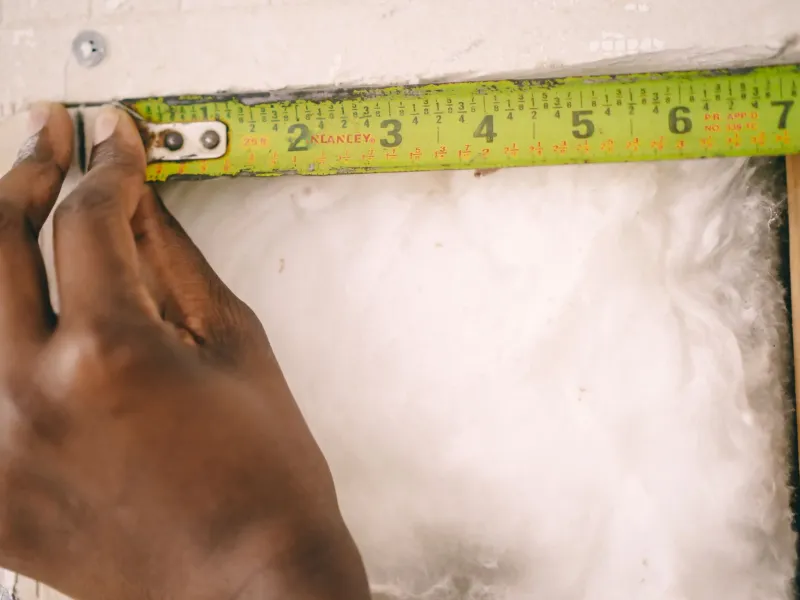
Royal Mail's large-letter and small-parcel thresholds still matter for many small businesses, but locker constraints can be stricter in practice. A pack that fits a small-parcel band may still be awkward in a locker if it is bulky or has protruding labels. Measure the finished pack, not the product, and check the current guidance from each carrier you use. Where possible, design a pack that fits a common medium compartment without void fill.
Design for weather without defaulting to plastic
Doorstep exposure is a real issue for paper-based packaging. Rain, damp air and wet surfaces can soften corrugated board and mark printed paper mailers. For moisture-sensitive products, a paper-only outer may not be enough. The answer is not automatically a plastic mailer. Recyclable paper mailers with water-based coatings, corrugated packs with a moisture-resistant liner and simple internal barriers can all work, provided they are tested against realistic exposure.
For many small product businesses, the more sustainable choice is right-sizing. A pack that fits the product closely needs less void fill, takes up less space in delivery vehicles and uses less material overall. Mono-material packs are generally easier for customers to recycle than composite packs with mixed plastic and paper layers. If you use a water-resistant coating, check whether it affects kerbside recyclability in your local authority area and keep the material description clear on the pack or website.
QR-code labelling needs to work at arm's length
QR codes are now part of the collection experience, from locker opening instructions to returns portals and care guides. A QR code that is folded around an edge, covered in reflective tape or printed at low contrast will slow down the handover. Place it on a flat, clean surface. Test it with a phone at arm's length under indoor lighting. Keep a human-readable order reference nearby as a backup for staff and customers who cannot scan.
For click-and-collect, the label also has to help shop staff find the parcel quickly. Use a clear order name or number, avoid loose items inside the pack and consider a tamper-evident seal that can be checked at the counter. If the parcel is going into a shared backroom, a neat, stackable shape is more useful than an oversized box that consumes shelf space.
A 2026 checklist for small product businesses
- Measure the finished pack against the locker aperture and the carrier's current size bands.
- Test a sample through the intended service, including a locker drop-off and a shop collection if possible.
- Check that the product cannot move inside the pack and that the outer holds its shape after handling.
- Review moisture resistance for doorstep delivery, especially for paper, textile and cosmetic products.
- Place QR codes and barcodes on flat surfaces and test scans with a normal phone camera.
- Use mono-material or easily separable components where practical, and label disposal clearly.
- Keep the pack easy to open without scissors and easy to flatten for recycling.
- Brief shop staff on identification, storage and handover so the collection experience matches the pack.
Click-and-collect works best when the packaging is quiet, legible and robust in the right places. The customer does not need a ceremonial box at the locker. They need a pack that arrives intact, scans first time and fits the shelf. That is the standard the final 100 metres now sets for UK product businesses in 2026.