Small Ticket, Considered Pack: Making a Sub-£5 Product Feel Worth Keeping

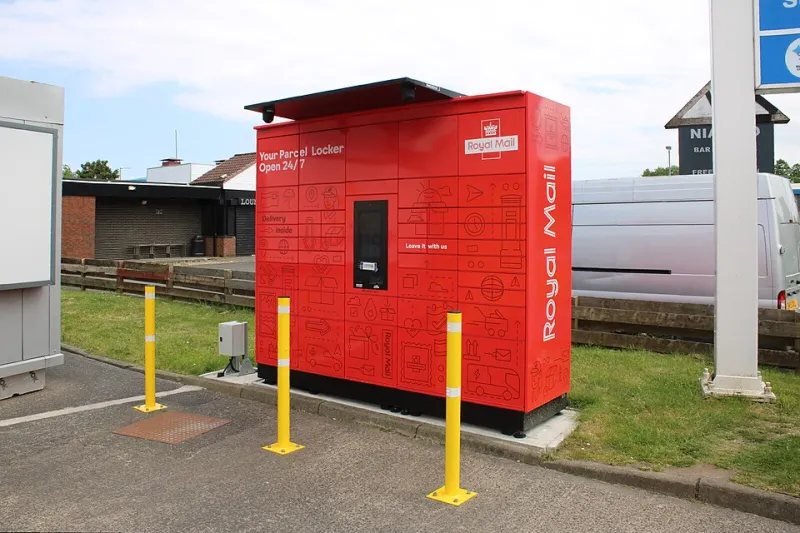
Photo: Rob Farrow , CC BY-SA 2.0, via Wikimedia Commons
At £4.99, a product sits on a psychological threshold. It is inexpensive enough to be an impulse purchase, yet visible enough that the customer still expects the parcel to arrive with some care. For UK makers, market traders and small retailers, the difficulty is not simply making the pack look good. It is making it look considered while keeping the unit economics intact.
Packaging for a low-ticket item has to work harder than packaging for a premium one. There is less room for error, less budget for experimentation and less tolerance for postage upgrades. The answer is rarely a more expensive box. It is usually a tighter brief: fewer components, better fit, stronger material logic and one clear branding cue.
Start with the ceiling, not the catalogue
Before choosing a mailer, set a packaging ceiling. Include every element that leaves the workspace with the product: outer mailer, label, tape, tissue, belly band, insert, void fill and the labour to assemble it. For many sub-£5 lines, a realistic materials budget may sit somewhere between 30p and 60p per order, though the right figure depends on the product, channel and average order value. Even at 50p, every component has to earn its place.
A useful discipline is to compare packaging cost with contribution margin, not just selling price. If a £4.99 item carries £2.20 of product cost and £1.80 of postage, a 70p pack can erase much of the remaining contribution. That does not mean the pack must be plain. It means the pack must be efficient.
Let Royal Mail thresholds shape the design
For many small UK businesses, Royal Mail's large-letter and small-parcel thresholds are the first design constraint. A large letter must measure no more than 35.3cm x 25cm x 2.5cm and weigh no more than 750g. A small parcel can be up to 45cm x 35cm x 16cm and 2kg. Crossing from one band to the other can change the postage cost enough to alter the viability of a sub-£5 product.
This is why flat, rigid packaging deserves more attention than it often receives. A print, a card set, a piece of jewellery or a small textile accessory may be better served by a rigid card-backed envelope than a small box. The pack stays within large-letter dimensions, protects the product from bending and presents a clean surface for a printed label or branded sticker.
But do not force a product into a large letter if it needs protection. A crushed pack costs more than a postage upgrade. The practical test is simple: assemble the finished pack, weigh it, measure it and send a sample to yourself through the intended service. Repeat the test once with normal handling and once with a little compression. If the pack fails, change the pack — not the promise.
Spend on the surfaces the customer touches
Perceived value in low-ticket packaging comes from tactile order, not ornament. A plain micro-flute corrugated mailer printed in one colour can feel more deliberate than a glossy bubble bag. A paper envelope with a rigid insert can feel more thoughtful than a loose product sliding around inside a box. A glassine bag and a printed belly band cost very little and create a small sequence: outer, inner, product.
Several materials do useful work without inflating cost. Micro-flute corrugated board is light, rigid enough for many small parcels and widely recyclable. Rigid card backers protect flat items without adding much weight. Glassine bags suit small dry goods and give a clean, quiet finish. Uncoated paper labels and paper tape look more considered than shiny synthetics and are easier to recycle in many kerbside systems. A single QR card can replace a multi-page insert and direct the customer to care instructions or a reorder page.
The branding rule is restraint. One strong mark, one repeating colour and one clear line of copy will usually outperform five competing messages. The customer should be able to tell what the product is, who sent it and how to care for it without unfolding a brochure. Considered packaging is not the same as luxury packaging. It is packaging that fits, protects and explains.
Avoid the usual low-ticket traps
The most common mistake is over-boxing. A small product in a large box needs void fill, which adds cost, weight and waste. Another is using premium finishes on a product that cannot support them: foil blocking, custom tissue and bespoke rigid boxes can look generous in a sample room but punitive in a spreadsheet. A third is inconsistent packing between orders. If one customer receives a neat card wrap and another receives a loose bag, the brand signal becomes noise.
A useful checklist for a sub-£5 line is short. Does the finished pack fit the intended postal band? Is the product immobile inside the pack? Can the pack be assembled in under a minute? Is there one clear branded element? Can the customer recycle most of it easily? If the answer to all six is yes, the pack is probably doing its job.
Low-ticket does not have to mean low-signal. The most effective packaging for a £4.99 product is not the cheapest possible wrap, nor a miniature luxury box. It is a disciplined, fit-for-purpose pack that makes the customer feel the purchase was thought through — and makes the business feel there is still margin left at the end of the day.