Below Four Degrees: Building an Insulated Pack That Survives a British Doorstep
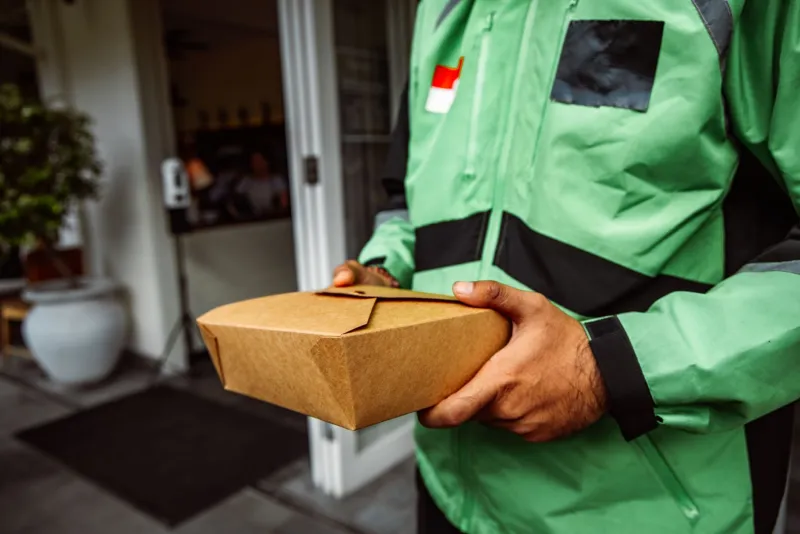
Chilled food sent by courier is one of the few areas of UK packaging where a badly chosen liner is not merely a poor customer experience — it is a potential food-safety failure. Recipe boxes, prepared meals, chilled hampers and dairy-heavy subscriptions all sit at the sharp end of the problem: the product must remain below 8°C throughout a journey that the brand does not fully control, and it must do so in packaging that a householder in Bristol, Bolton or Belfast can reasonably dispose of.
That tension — food safety on one side, material honesty on the other — is what makes insulated packaging harder than it looks. The good news is that the market of 2026 offers four credible systems, each with a distinct performance profile, cost shape and end-of-life story. Choosing between them is a matter of matching the pack to the distribution reality rather than selecting the option with the greenest description.
What the Law Asks Before You Choose a Material
Under UK food law, chilled food must be held at a temperature that does not compromise safety, conventionally understood as 0°C to 5°C for chilled products and no warmer than 8°C at any point. Frozen goods are normally held at -18°C or colder. As a food business operator, responsibility for that chain sits with you even when the van belongs to someone else, which is why a documented temperature profile — not a supplier's marketing claim — is the correct starting point.
In practice that means three things. First, a hazard analysis that treats the transit leg as a controlled step. Second, a delivery proposition that matches the insulation: an unattended doorstep drop in July is a different engineering problem from a signed-for handover. Third, labelling that carries the storage instruction clearly, since "keep refrigerated" and a use-by date are what allow the customer to complete the chain on your behalf. Insulation cannot rescue a delivery promise that ignores these three.
The Four Systems, Assessed
Wool felt liners
British wool liners have become the default aspirational choice for small chilled-food brands, and the reputation is largely earned. Wool is a strong insulator when dry, performs acceptably at ambient humidity, and is naturally compostable and biodegradable at end of life. It is heavier and bulkier than synthetic alternatives, which affects volumetric cost, and its performance degrades once saturated — so a liner needs a water-resistant outer bag if the parcel is likely to sit in rain. The domestic supply of British wool is a genuine story, provided you can evidence the provenance rather than implying it.
Recycled paper padding
Paper-based void fill and honeycomb wraps work well as cushioning and carry an excellent kerbside recycling story, but they are modest insulators in their own right. Used as the sole barrier, paper struggles to hold a chilled product for a full courier day in warm weather. Used in combination — a paper-based outer with a reflective or wool lining — it earns its place by removing plastic from the parcel and simplifying household disposal. The mistake is to treat paper as an insulation system when it is really a packaging material doing a supporting job.
Gel packs
Water-based gel packs remain the most common solution and the cheapest per unit. They are effective, well understood by customers, and easy to size by trial. Their weaknesses are equally well understood: they warm relatively quickly compared with phase-change materials, they add considerable weight, and disposal is inconsistent. Many councils do not accept them at kerbside, and the contents, while generally non-hazardous, are not designed for the drain. For a brand selling on convenience, a pack that must be taken to a supermarket collection point is a friction point.
Phase-change materials
Phase-change materials — usually salt-based, engineered to hold a specific temperature — outperform gel packs in sustained heat and can be reused many times. They are the correct answer for long transit legs, hot-weather months and premium chilled ranges where failure is expensive. The trade-offs are capital cost, a returns or reuse loop if you want to realise the environmental benefit, and the need to explain to customers that the pack is reusable rather than disposable. A reusable PCM that goes in the bin delivers none of its advantage.
Testing Against the Doorstep, Not the Lab
A liner's datasheet is measured under controlled conditions. A British doorstep is not. Three scenarios deserve deliberate testing before launch.
The heatwave drop. A parcel left on a south-facing step in a July afternoon can experience internal temperatures well above ambient. A useful test is a full 24-hour profile with data loggers at the product surface, not merely at the centre of the box.
The missed delivery. If the courier returns the parcel to a depot and re-attempts the following day, the pack may face 36 hours rather than 18. Insulation that is adequate for a first attempt may be inadequate for a second, and the customer — not the depot — will bear the consequence.
The multi-drop route. Meal-kit couriers often run long routes. A box loaded at 6am may not arrive until late afternoon, and the ice fraction in a gel pack will have done most of its work by then. Sizing on the basis of a short local delivery is a common and avoidable error.
Where any of these risks cannot be engineered out, the delivery proposition should change instead: a narrower window, a signed-for option, or a chilled locker where the infrastructure exists.
The Kerbside Reality
Recycling rules across the UK remain genuinely patchwork, and insulated packs sit awkwardly across collection boundaries. Wool is compostable in principle, though home composting guidance varies and should be stated plainly. Paper components are widely accepted, subject to local rules on tape and coatings. Gel packs are the weakest link, and phase-change packs demand a return route to be defensible.
Two 2026 considerations sharpen this. Extended producer responsibility fees now price packaging by weight and by recyclability, so a heavy, hard-to-recycle liner carries a higher obligation than its unit cost suggests. And on-pack labelling using the Recycle Now conventions is now expected rather than admired; vague symbols invite the wrong disposal decision and the complaint that follows.
A simple test before signing off any insulated pack: could a customer with no packaging knowledge dispose of every component correctly, using only what is printed on the box?
Cost, Claims and the Story You Can Defend
Gel packs are cheapest to buy and easiest to source. Wool sits in the middle, with a strong narrative and a weight penalty. Phase-change materials cost most up front but amortise well if the reuse loop is real. Across all four, the environmental claim that survives scrutiny is the specific one: "wool liner, home compostable, remove the tape first" is defensible; "eco-friendly packaging" is not, and the Competition and Markets Authority's green claims guidance has made that distinction increasingly uncomfortable for brands that blur it.
The most credible position for a small UK brand in 2026 is usually a hybrid: a paper-based outer for kerbside simplicity, a wool or PCM inner chosen by season, and a delivery promise that matches the insulation rather than flattering it. Insulation is not a branding exercise. It is a temperature-controlled process with a material choice attached, and the brands that treat it that way tend to be the ones whose customers never have cause to think about it at all.