Built to Come Back: Designing Packaging for the UK’s Reuse and Refill Loops
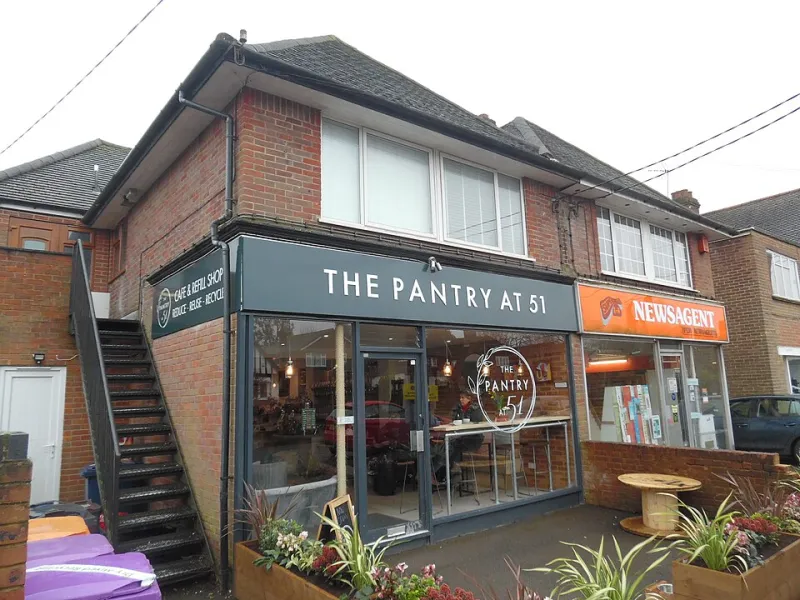
Photo: David Hillas , CC BY-SA 2.0, via Wikimedia Commons
Reuse is no longer a side note in UK packaging conversations. In 2026, retailers are running refill stations, deposit-return trials and reusable delivery packs across a range of categories, and smaller brands are being asked whether their packaging can join in. The question is rarely about ambition. It is about whether a pack can survive the loop — collection, cleaning, refilling, reshelving and another delivery — without losing its shape, its legibility or its brand presence.
That changes the design brief. A single-use pack is optimised for one moment: the unboxing, the shelf, the first impression. A reusable pack is optimised for repetition. It has to look considered on cycle one and still function on cycle ten. For UK product businesses, the practical work sits in four areas: material choice, label durability, return instructions and the cost maths of reuse.
The brief changes when the pack has a return leg
Most packaging decisions start with unit cost and print quality. Reuse adds two more variables: cycle count and recovery rate. Before choosing a material, a brand needs a realistic view of how many trips a pack will make and how many packs will actually come back. A refill container used in-store may complete dozens of cycles; a reusable e-commerce mailer may manage fewer, with higher losses.
This is not a reason to avoid reuse. It is a reason to design for a defined loop rather than an imagined one. A closed-loop system — one product, one collection point, one cleaning route — is far easier to specify than an open system where packs travel through multiple handlers. Small brands often do better starting with a narrow, local loop and a single hero product than with a broad scheme that tries to cover every SKU.
Materials that tolerate the wash cycle
Rigid polypropylene and high-density polyethylene are common choices for refill containers because they resist moisture, detergents and repeated handling. They are lightweight relative to glass and can be moulded with smooth interiors that are easier to clean. Glass remains attractive for premium products and is chemically inert, but its weight and breakage risk affect transport emissions and return logistics. Aluminium and steel have a place for tins and containers, though dents and coating wear need to be assessed.
For reusable delivery packs, the outer material matters as much as the inner. Standard corrugated board is not designed for repeated wet handling. Moisture-resistant boards, polypropylene sheets or durable fabric wraps may be more appropriate, depending on whether the pack is returned by post, locker or courier. Food-contact compliance also needs checking at every cycle, not just at manufacture, because cleaning regimes and wear can affect the surface.
A useful rule is to specify the cleaning method before specifying the material. A pack that cannot be cleaned in the equipment a retailer already has is unlikely to survive procurement.
Labels and markings that survive the journey
Paper labels with standard adhesives are a weak point in reuse. They lift at edges, fade under cleaning and leave residue that undermines the pack’s appearance. Direct printing, in-mould labelling and durable polymer labels are more robust options for refill containers. For returnable delivery packs, consider printed panels or removable but robust identification rather than a single sticky label that will be replaced many times.
Barcodes and QR codes need to remain scannable after washing and handling. A code that works on day one but fails on cycle five creates friction at the returns desk. Where variable data is needed — batch, deposit status or return tracking — test the marking method against the cleaning process. The same applies to statutory information and allergen details: they must remain legible, not merely present.
Deposit and return instructions: clarity beats cleverness
Reuse schemes depend on consumer behaviour, and behaviour depends on clear instructions. A pack should state the deposit amount, where it can be returned, and what condition is acceptable. Icons help, but they should not replace plain English. UK deposit-return arrangements vary by nation and scheme, so brands should avoid over-specific claims that may not hold across every return point.
Instructions should be permanent rather than applied as a temporary sticker. They should also be positioned where they will be seen at the point of decision — on the pack itself, not buried in a leaflet. For online orders, the return route should be repeated in the dispatch note and on the brand’s website. Ambiguity at this stage leads to contaminated returns, lost deposits and customer frustration.
Hygiene perception is part of the design
Even a technically clean reusable pack can feel uncertain to a customer. Smooth surfaces, visible cleanliness and simple construction help. Hidden crevices, textured finishes that trap residue and complex closures all create doubt. Transparent or translucent designs can support confidence in refill settings, while tamper-evident features reassure customers that a pack has not been used since its last clean.
Brands should explain the cleaning protocol briefly and honestly. A short line on the pack or at the refill station — washed and inspected before reuse — does more for trust than an elaborate sustainability claim. Hygiene is not only a compliance issue; it is a design issue that affects return rates.
The cost maths: cycles, not unit price
Reusable packaging is rarely cheaper per unit. The comparison is cost per use. A simple model is: unit cost plus collection, cleaning and logistics per cycle, divided by the number of cycles achieved. If a reusable pack costs £2.50, costs £0.60 per cycle to recover and clean, and completes ten cycles, the cost per use is about £0.85. A single-use pack at £0.45 looks cheaper unless the reusable pack achieves more cycles or the scheme delivers value in other ways.
Those other ways matter: brand differentiation, waste reduction, customer loyalty and compliance with emerging expectations. But the arithmetic should still be done. Small UK brands should model a conservative return rate, include the cost of lost packs, and test the break-even cycle count before scaling. Starting with one product and a local loop makes those numbers easier to observe and adjust.
A sensible starting point
For a small brand, the first step is not a full reuse system. It is a single SKU, a defined return route and a pack that can be cleaned without special equipment. Run the loop with a small group of customers, inspect packs after three, five and ten cycles, and record where they fail. The results will say more about material choice, label durability and instructions than any general guide. Reuse works when the pack is designed to come back — and when the business is designed to receive it.