A 25-Millimetre Brief: Designing Letterbox Gifts for UK Doorways

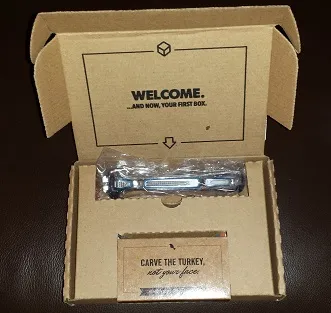
Photo: letterbox gift packaging flat parcel on UK doormat, via images-wixmp-ed30a86b8c4ca887773594c2.wixmp.com
Letterbox gifts occupy an unusual place in UK e-commerce. The product may be small, but the packaging brief is not. A pack that is too deep becomes a parcel; a pack that is too thin exposes the gift to crush damage; a pack that is technically compliant but awkward to open undermines the moment the customer has paid for. The letterbox is therefore not simply a delivery route. It is a design constraint that shapes the product, the pack, the fulfilment process and the brand impression.
For UK product businesses, the commercial appeal is clear. Letterbox-friendly gifts can be posted without a delivery slot, can be received when nobody is at home and can feel more personal than a standard parcel. Yet the format is unforgiving. Success depends on treating the slot as a specification from the outset, rather than adapting a conventional gift pack at the last stage.
Begin with the aperture, not the product
Many brands start with the item and then look for a box that will fit through a door. A more reliable sequence is to start with the carrier definition, then work backwards to the product presentation. In the UK, Royal Mail's Large Letter format is capped at 35.3 cm by 25 cm by 2.5 cm and 750 g. Other carriers use their own letterbox-friendly criteria, and household letterboxes vary. A pack described as letterbox-friendly should be tested against the relevant service rather than assumed to be universally acceptable.
The critical measurement is the external pack at its widest point, including labels, closures, shrink wrap and any bulge caused by the contents. A pack that measures 2.4 cm on the bench may exceed 2.5 cm once a candle is wrapped, a card is added and a mailing label is applied. Brands should build a simple slot gauge that reflects the carrier's limits and use it at the packing station, not only in the design studio. If the pack relies on compression to pass through the slot, it is not truly letterbox-ready.
Dimensional discipline in practice
Shallow packs reward restraint. Rigid boxes, deep gift boxes and heavy inserts are usually the wrong starting point. Flat-folded cartons, card sleeves, corrugated wraps, moulded pulp trays and book-style folds can hold a gift securely while keeping depth under control. Multi-item sets may need to be split across two letterbox packs rather than compressed into one. That decision has a cost, but it is often preferable to a damaged gift or a pack that is rejected at the mail centre.
Material caliper matters as much as construction. A heavier board may improve perceived quality, but it also consumes depth. Lighter board can work if the structure provides rigidity through folds, fluting or a telescoping sleeve. The aim is not to make the pack as thin as possible. It is to make every millimetre earn its place.
Weight is the second boundary. The 750 g ceiling for Royal Mail Large Letter is generous for jewellery, cosmetics, confectionery and small home accessories, but it can be reached quickly with glass, ceramics or multiple products. Brands should weigh the packed item, not the net product weight, and should allow for the mailing label, gift message and any protective wrap. A set that sits close to the limit may be better sent as a small parcel.
Protection without volume
The letterbox pack must survive sorting machinery, other mail, a doormat and the possibility of being stood on. Thin does not mean unprotected. The protective strategy should control movement first. If the product can shift inside the pack, it can strike a wall or settle into a position where the contents no longer fit the slot. Retention is therefore more important than adding layers of void fill.
Corrugated wraps, honeycomb paper, moulded pulp cradles and card locking tabs can hold small gifts firmly with minimal depth. Loose fill is generally a poor fit for letterbox packs because it migrates, adds bulk and creates a messy opening experience. Air pillows may protect the product, but they consume depth and introduce a mixed-material disposal question. For fragile items, a shallow but rigid outer sleeve combined with an internal card cradle often performs better than a soft mailer with extra bubble wrap.
Brands should also consider the British weather and the doormat environment. A letterbox pack may sit on a mat, be pushed against a door or be picked up with wet hands. Paper-based packs need adequate moisture resistance for the journey, but fully waterproof laminates can complicate recycling. The right answer depends on the product and the expected exposure, not on a blanket rule.
The unboxing moment in a shallow format
A letterbox gift has a compressed reveal. The customer sees the pack on the mat before they see the product, so the outer surface is part of the gift. A clean printed mailer, a discreet pattern or a personalised address panel can create anticipation without adding depth. Inside, the sequence should be simple: open, remove the contents, find the message, reach the gift. Too many layers turn a small moment into a chore.
Printed inner surfaces, a belly band, a gift card and a QR code to a personal message can all add perceived value without adding much bulk. Tactile finishes should be chosen with care. Heavy embossing, thick ribbons and rigid inserts may lift the impression, but they can also push the pack beyond the slot or make it harder to recycle. The most effective letterbox packs tend to be confident rather than crowded.
Sustainability choices under constraint
Letterbox gifting is often presented as a lower-impact delivery model because it uses less void space and can be posted through an existing route. That advantage is easily lost if the pack combines paper, plastic film, foam and mixed laminates. Brands should aim for material simplicity, right-sizing and clear disposal instructions. Paper-based packs with water-based inks and minimal plastic components are generally easier for UK households to recycle at kerbside, although local rules still vary.
Claims should be precise. A pack is not automatically sustainable because it is letterbox-sized. Brands should consider fibre sourcing, recycled content, material separation, pack weight and the rate of damaged deliveries. Under UK packaging extended producer responsibility, the data a business collects about materials and weights also becomes more useful when the pack is designed with fewer components. A simple pack is usually easier to account for as well as easier to recycle.
Test the pack as a system
A letterbox pack should be tested in the conditions it will meet: the slot gauge, the carrier's handling, a short drop, a stacked load and a real packing station. Staff need a clear routine for folding, inserting and sealing so that the designed depth is reproduced consistently. A pack that works only when assembled by the designer is not ready for fulfilment.
Brands should also monitor damage rates and customer comments. A photograph of a crushed corner or a pack that would not fit through a door is more valuable than an assumption. The goal is not merely a pack that passes the slot. It is a pack that arrives intact, opens cleanly and leaves the customer with the impression that the gift was considered from the first millimetre to the last.